I changed web hosts this week for the sites I host. If you've ever done that, you may know that it's not always pain free to change hosts - there are usually lots of "gotchas" that you don't foresee. Like stupid stuff buried in the fine print that you didn't notice before you signed up with that new web host. Or claims that they do things or have services that turn out to not be true. I've been there, done that and got the t-shirt more than once since I've been on the Internet, so changing hosts is not only something I dread - I'm now very careful, or try to be, before I change hosts.
My old web host was imhosted.com. I had been with them for years - after starting out with a couple of smaller hosts. They were far from perfect. They have no telephone support available at all, and that's something that probably should have steered me somewhere else, but I thought I could deal with email only support.
But then when I did need support, I'd get email responses with sentences that didn't exactly make a whole lot of sense - it was obvious that English was not their primary language. Email responses that would end with something like - "We have done the needful". Nobody who speaks English talks like that. My guess is they used some translation software to get from something that made sense in their language to something that sounded pretty stupid in English. Just about every support email response I ever got from them ended that way - and from different support people - with names like Sam, Beth, Bob, Sue. Come on now, when you say something like "we have done the needful" I now damn good and well that your name is not Sam.
So when I decided to switch web hosts this time, of course I couldn't call imhosted. So I went to their support site, logged in, and attempted to submit a support ticket. Only this time, after clicking on submit ticket, I was presented with this page:
Notice the last sentence there, "you can submit a ticket by selecting the appropriate department below" followed by nothing but blank space. Yes, file this under stupid stuff on the Internet - there is no department below to select from.
And this from a company that makes money by being on the Internet. I think that's really dumb.
And that's why I'm glad I switched web hosts this week. Not so much because I expect my new web host to be perfect or a whole lot better than imhosted.com - but because imhosted.com has done more than their fair share of stupid stuff on the Internet with me. It was time to move on and put a different "Kick me" sign on my back.
Who is my new web host? I'd rather not comment here. But I'm relatively sure they'll do their share of stupid stuff on the Internet at some point as well. So it goes.
Wednesday, April 27, 2011
Sunday, February 20, 2011
Keep it simple, stupid
A few years after I got into radio, I had a mentor named Jerry Johnson. Jerry was already at KXEO when I started, but it wasn't until he became general manager that he became my mentor. I'm not sure either one of us knew the exact moment when he took on the role of mentor, nor I to be his student, it just happened as we worked together to make KWWR and KXEO great radio stations.
Jerry was general manager and chief engineer for the stations. I had minored in electronics in college to back up my main studies in broadcasting. So every chance I got, I was alongside Jerry when something needed fixing. Soon I was involved in repairing the Harris System 90 automation systems (one for KXEO and one for KWWR), the audio control boards, the transmitters and anything else that needed fixing at the stations. And over time I became the first person to call when something needed fixing. I could call on Jerry if I got into something over my head and he would take the time teach me some new aspect of repairing the equipment so that maybe next time I wouldn't need to call him.
As I worked in programming and engineering over the years, I learned that If I could show Jerry how replacing a worn out microphone would make the morning DJ sound better (and do a better job), or showed how a new piece of audio processing equipment could keep our sound competitive with the stations in St. Louis or Kansas City would be a valuable asset to the station he would give the OK to proceed.
We did that with hiring people, too. If I found somebody that would be an asset for the stations, and could "sell" Jerry on the idea of making the stations even better - Jerry had no problem in that area either..
With Jerry as General Manager, me as Operations Manager, a sales department that hustled and a programming department that got it right most of the time - the stations had never sounded better.
I think the concept of "can't" wasn't in Jerry's vocabulary. Under his leadership, the stations covered the dedication of the Clarence Cannon Dam at Mark Twain Lake (which is a story all by itself), the stations got in on the on ground floor of the old Wrangler Country Star Search - building up quite a program to recruit and showcase local country music talent. When the AM ground system of wires was found (by me) to be rotting in the early 80's, Jerry headed up a team of us at the station to install an entirely new ground system, using mainly afternoons and weekends, a small tractor and a modified tree planting device borrowed from his brother Jim. We laid in 120 120' copper radials spreading out from the AM tower. When the FM station applied for and was granted a construction permit for a 1,000' tall tower just west of Mexico, Jerry again led the team of us and we surveyed the 40 acre tower site, marking the locations for each concrete anchor point for the guy wires, we built the wood frame transmitter building one summer, in preparation for the new tower. It was tough getting the regular daily radio station business done to a point we could spend those afternoons and weekends on construction - but it was exhilarating.

I'll never forget his rule of keeping it simple - and that applied to everything, from employees to listeners to contests, the audio chain or the transmitter plants.
While many people like to think the stupid in Keep It Simple Stupid doesn't apply to them, that's actually where it should be applied first - from the top and then right on down the line.
Here's an example of KISS in action....Jerry pointed out to me that the National Weather Service apparently loved statistics. "The dryest ...., the coldest ...., the hottest summer on record since 1896". And in forecasting a 20% chance of this, a 50% chance of that, an 80% chance of the other. Jerry said when you boil it all down and get rid of the statistics, all people really want to know is: Is it going to rain?, or Is it going to snow?, how hot or cold is it going to be this morning compared to this afternoon?
So instead of the weather forecast and information being a jumble of statistics - which people are not likely to remember, just KISS - is it going to rain today?
People don't usually talk in statistics - :"There's an 80% chance I'll get hit if I cross before that big bus goes by, but only a 20\% chance of being hit if I wait for the crosswalk sign."
Jerry believed in applying KISS to all aspects of the weather. While the National Weather Service may issue a forecast something like this: "A 30% chance of showers today, a 20% chance of showers tonight and an 80% chance of rain tomorrow" - that's using statistics (probabilities). and not KISS. A more natural or conversational way to state that same forecast would be something like this: "There is a slight chance of rain through tonight and showers are likely tomorrow."
Us common folks are far more likely to remember the KISS methodology to the weather forecast than the forecast that has statistics.
While some translate KISS as Keep It Simple (for) Stupid, Jerry taught me the real meaning is Keep it simple, stupid, where stupid more times than not is yourself.
Jerry was general manager and chief engineer for the stations. I had minored in electronics in college to back up my main studies in broadcasting. So every chance I got, I was alongside Jerry when something needed fixing. Soon I was involved in repairing the Harris System 90 automation systems (one for KXEO and one for KWWR), the audio control boards, the transmitters and anything else that needed fixing at the stations. And over time I became the first person to call when something needed fixing. I could call on Jerry if I got into something over my head and he would take the time teach me some new aspect of repairing the equipment so that maybe next time I wouldn't need to call him.
As I worked in programming and engineering over the years, I learned that If I could show Jerry how replacing a worn out microphone would make the morning DJ sound better (and do a better job), or showed how a new piece of audio processing equipment could keep our sound competitive with the stations in St. Louis or Kansas City would be a valuable asset to the station he would give the OK to proceed.
We did that with hiring people, too. If I found somebody that would be an asset for the stations, and could "sell" Jerry on the idea of making the stations even better - Jerry had no problem in that area either..
With Jerry as General Manager, me as Operations Manager, a sales department that hustled and a programming department that got it right most of the time - the stations had never sounded better.
I think the concept of "can't" wasn't in Jerry's vocabulary. Under his leadership, the stations covered the dedication of the Clarence Cannon Dam at Mark Twain Lake (which is a story all by itself), the stations got in on the on ground floor of the old Wrangler Country Star Search - building up quite a program to recruit and showcase local country music talent. When the AM ground system of wires was found (by me) to be rotting in the early 80's, Jerry headed up a team of us at the station to install an entirely new ground system, using mainly afternoons and weekends, a small tractor and a modified tree planting device borrowed from his brother Jim. We laid in 120 120' copper radials spreading out from the AM tower. When the FM station applied for and was granted a construction permit for a 1,000' tall tower just west of Mexico, Jerry again led the team of us and we surveyed the 40 acre tower site, marking the locations for each concrete anchor point for the guy wires, we built the wood frame transmitter building one summer, in preparation for the new tower. It was tough getting the regular daily radio station business done to a point we could spend those afternoons and weekends on construction - but it was exhilarating.

I'll never forget his rule of keeping it simple - and that applied to everything, from employees to listeners to contests, the audio chain or the transmitter plants.
While many people like to think the stupid in Keep It Simple Stupid doesn't apply to them, that's actually where it should be applied first - from the top and then right on down the line.
Here's an example of KISS in action....Jerry pointed out to me that the National Weather Service apparently loved statistics. "The dryest ...., the coldest ...., the hottest summer on record since 1896". And in forecasting a 20% chance of this, a 50% chance of that, an 80% chance of the other. Jerry said when you boil it all down and get rid of the statistics, all people really want to know is: Is it going to rain?, or Is it going to snow?, how hot or cold is it going to be this morning compared to this afternoon?
So instead of the weather forecast and information being a jumble of statistics - which people are not likely to remember, just KISS - is it going to rain today?
People don't usually talk in statistics - :"There's an 80% chance I'll get hit if I cross before that big bus goes by, but only a 20\% chance of being hit if I wait for the crosswalk sign."
Jerry believed in applying KISS to all aspects of the weather. While the National Weather Service may issue a forecast something like this: "A 30% chance of showers today, a 20% chance of showers tonight and an 80% chance of rain tomorrow" - that's using statistics (probabilities). and not KISS. A more natural or conversational way to state that same forecast would be something like this: "There is a slight chance of rain through tonight and showers are likely tomorrow."
Us common folks are far more likely to remember the KISS methodology to the weather forecast than the forecast that has statistics.
While some translate KISS as Keep It Simple (for) Stupid, Jerry taught me the real meaning is Keep it simple, stupid, where stupid more times than not is yourself.
So it goes.
Monday, February 7, 2011
What happened to network compensation, commercial time limits per hour and The National Anthem?
TV stations are still familiar with the term network compensation, but fewer and fewer radio stations are getting this source of income anymore.
There are several ways stations (TV and radio) enjoy affiliation with a particular network and how the money may flow one way or the other. For the rest of this discussion, I'll stick to radio, since that's what I'm most familiar with.
1) Straight barter. In the world of "just" barter, the programming a radio station gets from a network is given in exchange for the network commercials sold by the network and aired on the network and the station with the programming. The local station gets the programming, along with some local "avail" slots that can be sold locally by the station. In a typical hour of entertainment programming, the network may get 6 minutes or more, and the local station gets about 6 minutes, sometimes more. That keeps the programming to commercial mix at somewhere around 12 minutes of commercials and 48 minutes of program per hour. And 12 minutes of commercial time per hour is keeping with the programming philosophy of most stations these days. But there are exceptions, local stations can usually insert more commercials, especially if the programming is pre-recorded, which will then cause some hours of programming to run longer - a 2 hour program may run 2 hours and 20 minutes, a 3 hour program may run 3 and a half hours. This is at the expense of the listener since commercial breaks are longer than intended, but make the station owners more money.
2) Barter and compensation. In this arrangement, the compensation can work two ways - the station gets avails and some form of monetary compensation from the network (the most common way), or the station gets local avails and has to pay the network a fee for the programming content. If the programming is in high demand by local stations - this may be the arrangement - where the station pays for the programming.
3) Straight compensation. In rare situations, a network may pay to get a program aired by a station, if the station has demos (demographics=listeners) the network desires and the network can't get to the listener any other way. Or a station may pay the network or program supplier for the programming, if the local station believes the programming is worth paying for to present to their listeners.
Prior to the 1980s, it was common for networks to pay compensation to stations - because the networks believed the local listener was a valuable commodity. Which network aired on a particular station was tied to how much money a given network was willing to pay the local station. This was the basis of network provided programming on radio for many decades - until the the networks got "wise".
In the 1980s the networks started finding out that their programming was valuable enough to stations (keep in mind stations had local avails to sell even back when the networks were paying compensation) that stations would keep the network programming even if network compensation was taken out of the picture.
As time progressed, fewer and fewer small and medium market broadcasters were receiving network compensation.
In the days of network compensation - even in fairly small markets, network compensation could have been $30-70,000 per year (if not more).
Small market stations that were able to hang on to network compensation until recent years were very lucky and very few. This is a cash cow that has dried up for the most part at the small and medium market level.
Most stations get their network provided programming on a straight barter basis - rarely does any compensation take place one way or the other in the 21st century. But the barter way of doing it, has allowed stations to continue to receive high quality programming - far beyond the capabilities of their local staffs - and that's worked out well for the networks, the stations and the listeners.
Stations that have a 12 minute limit on commercials per hour should stick to that limit - regardless of the time of year or the demand for ad time (eg. political season).
There have never been laws or regulations regarding how many minutes of commercials a station could air in any given hour - most broadcasters used to abide by the NAB Seal of Good Practice - no more than 18 minutes per hour for radio and no more than 16 minutes per hour for television. A code that was adopted specifically with the idea to keep the government out of setting any national standard rule or regulation.
As radio stations became more competitive for listeners ears - they took it upon themselves to decrease the minutes per hour "guarantee" of no more than X minutes of commercials, or always an X minutes of music or programming per hour. This has worked well for advertisers - fewer overall commercials that your commercial has to compete against in the hour and for the listener - a basic code of ethics to give the listener the best ratio of programming versus commercials.
Now its common for station group owners at the national level (eg. Cumulus, Emmis) or regional level (eg. Zimmer, GoodRadio), to have a code of no more than 12 commercial minutes per hour as a guarantee to advertisers and listeners.
For stations that don't stick to X minutes of commercials per hour - that works against the advertiser and the listener. For the advertiser it means more ads per hour where your one commercial can get lost in an ocean of commercials. For the listener it means a higher price is paid in time spent listening to commercials versus time spent listening to programming - which also hurts the advertiser.
Oh, and The National Anthem: Not too many years ago radio and TV stations shut down at some late hour every night, and then powered back up by 5 or 6 AM as most Americans were waking up. And most stations aired our National Anthem at sign off and sign on time as a daily tribute to our country and its people. But then came satellite and cable television stations and networks running 24 hours a day and that led to the local station broadcasting 24 hours a day as well, which in turn pushed the National Anthem out of daily programming on radio and TV. Most of the nation still slept overnight after working day shifts, but stations found late night to be new territory for airing commercials - whether anyone was seeing or hearing those commercials or not.
There are several ways stations (TV and radio) enjoy affiliation with a particular network and how the money may flow one way or the other. For the rest of this discussion, I'll stick to radio, since that's what I'm most familiar with.
1) Straight barter. In the world of "just" barter, the programming a radio station gets from a network is given in exchange for the network commercials sold by the network and aired on the network and the station with the programming. The local station gets the programming, along with some local "avail" slots that can be sold locally by the station. In a typical hour of entertainment programming, the network may get 6 minutes or more, and the local station gets about 6 minutes, sometimes more. That keeps the programming to commercial mix at somewhere around 12 minutes of commercials and 48 minutes of program per hour. And 12 minutes of commercial time per hour is keeping with the programming philosophy of most stations these days. But there are exceptions, local stations can usually insert more commercials, especially if the programming is pre-recorded, which will then cause some hours of programming to run longer - a 2 hour program may run 2 hours and 20 minutes, a 3 hour program may run 3 and a half hours. This is at the expense of the listener since commercial breaks are longer than intended, but make the station owners more money.
2) Barter and compensation. In this arrangement, the compensation can work two ways - the station gets avails and some form of monetary compensation from the network (the most common way), or the station gets local avails and has to pay the network a fee for the programming content. If the programming is in high demand by local stations - this may be the arrangement - where the station pays for the programming.
3) Straight compensation. In rare situations, a network may pay to get a program aired by a station, if the station has demos (demographics=listeners) the network desires and the network can't get to the listener any other way. Or a station may pay the network or program supplier for the programming, if the local station believes the programming is worth paying for to present to their listeners.
Prior to the 1980s, it was common for networks to pay compensation to stations - because the networks believed the local listener was a valuable commodity. Which network aired on a particular station was tied to how much money a given network was willing to pay the local station. This was the basis of network provided programming on radio for many decades - until the the networks got "wise".
In the 1980s the networks started finding out that their programming was valuable enough to stations (keep in mind stations had local avails to sell even back when the networks were paying compensation) that stations would keep the network programming even if network compensation was taken out of the picture.
As time progressed, fewer and fewer small and medium market broadcasters were receiving network compensation.
In the days of network compensation - even in fairly small markets, network compensation could have been $30-70,000 per year (if not more).
Small market stations that were able to hang on to network compensation until recent years were very lucky and very few. This is a cash cow that has dried up for the most part at the small and medium market level.
Most stations get their network provided programming on a straight barter basis - rarely does any compensation take place one way or the other in the 21st century. But the barter way of doing it, has allowed stations to continue to receive high quality programming - far beyond the capabilities of their local staffs - and that's worked out well for the networks, the stations and the listeners.
Stations that have a 12 minute limit on commercials per hour should stick to that limit - regardless of the time of year or the demand for ad time (eg. political season).
There have never been laws or regulations regarding how many minutes of commercials a station could air in any given hour - most broadcasters used to abide by the NAB Seal of Good Practice - no more than 18 minutes per hour for radio and no more than 16 minutes per hour for television. A code that was adopted specifically with the idea to keep the government out of setting any national standard rule or regulation.
As radio stations became more competitive for listeners ears - they took it upon themselves to decrease the minutes per hour "guarantee" of no more than X minutes of commercials, or always an X minutes of music or programming per hour. This has worked well for advertisers - fewer overall commercials that your commercial has to compete against in the hour and for the listener - a basic code of ethics to give the listener the best ratio of programming versus commercials.
Now its common for station group owners at the national level (eg. Cumulus, Emmis) or regional level (eg. Zimmer, GoodRadio), to have a code of no more than 12 commercial minutes per hour as a guarantee to advertisers and listeners.
For stations that don't stick to X minutes of commercials per hour - that works against the advertiser and the listener. For the advertiser it means more ads per hour where your one commercial can get lost in an ocean of commercials. For the listener it means a higher price is paid in time spent listening to commercials versus time spent listening to programming - which also hurts the advertiser.
Oh, and The National Anthem: Not too many years ago radio and TV stations shut down at some late hour every night, and then powered back up by 5 or 6 AM as most Americans were waking up. And most stations aired our National Anthem at sign off and sign on time as a daily tribute to our country and its people. But then came satellite and cable television stations and networks running 24 hours a day and that led to the local station broadcasting 24 hours a day as well, which in turn pushed the National Anthem out of daily programming on radio and TV. Most of the nation still slept overnight after working day shifts, but stations found late night to be new territory for airing commercials - whether anyone was seeing or hearing those commercials or not.
Friday, January 21, 2011
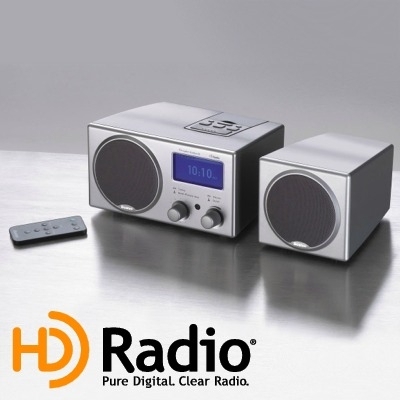
OK, we know what HD TV is, but what is HD Radio?
Broadcasters have been slow to embrace HD Radio for several reasons.
But first, let's step back and look at what happened to your local television stations. For several years there was a "push" for TV stations to start broadcasting a digital signal - which would then enable them to broadcast programming in high definition. The FCC got involved and assigned new channels for existing stations and for a period of time TV stations were broadcasting an analog (the original type of TV signal) and a new, digital signal. New TVs or tuners were required to receive the new digital signals, and in most cases, the digital signal was transmitted at lower power than the old analog signal. Theory is digital should work equally well with less power - not sure of the new math used with that idea. But one thing about digital signals - it's either on and looks great, or it's off and looks like "Signal Lost". No more ghosting, static or noisy video - it's now either there, or not, with nothing in between. The FCC set a time frame for TV stations to make the switch to digital and turn off the old analog signals, with the idea that some of the now freed up RF spectrum where the old signals existed could be used for things like public safety (police, fire, etc). Making the switch to digital has been expensive for TV stations - but they really had no choice but to make the FCC mandated switch.
Along with the change to digital - the aspect ratio of the TV picture also changed from the longtime 4:3 ratio (that's 4 units wide and 3 units high) - making for a slightly rectangular picture - to 16:9 closer to the widescreen images we get at the movie theater. (16 units wide and 9 units high). Modern film and filming techniques are widescreen, so the newer widescreen TVs give us more of the picture at home.
Although the digital TV signal makes it possible to broadcast a high definition signal, digital doesn't have to be high definition. So TV stations now have a main channel, which is mostly high definition, although at lower quality than it's capable of to make room for a couple of digital sub channels. The sub channels are often not high definition, but where TV stations used to just have one channel per station, they now have up to 3 channels per station. The sub channels are often used to broadcast 24/7 weather, or one of the lesser networks in a market, like CW or MyTV.
While there is no universal standard for HDTV in the US, most stations and networks choose either 720p or 1080i with a 16:9 wide screen aspect ratio. The highest quality high definition available is 1080p - not broadcast very often because of the bandwidth required - but lots of TVs support 1080p as do upscaling DVD players and Blu-Ray players.
Keep in mind, the FCC forced TV stations to switch to digital - or we'd still likely be watching that old noisy analog video we grew up with.
But, I digress. How does this relate to HD Radio?
HD Radio, or digital radio has been available to radio stations for several years now - but your local station may or may not be broadcasting digitally. And therein lies the rub - there are several reasons why any given station may not be broadcasting a digital signal.
First and foremost - the FCC is not mandating radio stations to broadcast a digital signal (yet). Because of that, the people making radios - namely car manufacturers have been slow to embrace HD Radio because of the lack of stations broadcasting HD Radio.
Second - stations can't just buy a digital transmitter, plug it in and start broadcasting digitally. The FCC has authorized a system called In Band On Channel, where the new digital signal is broadcast in the same RF energy bandwidth. A company named iBiquity stepped in to offer a digital standard for the new IBOC (In Band On Channel) digital broadcasting. So far, iBiquity is getting licensing money from several sources - transmitter manufacturers - to allow them to incorporate the iBiquity based IBOC radio system in their transmitters. A radio station would then need to buy a digital transmitter, a high or low level combiner to get the signal to the broadcast antenna with the old analog signal and possibly other equipment PLUS pay a licensing fee to iBiquity on an annual basis for the privilege of broadcasting the new digital HD Radio signal. And like Television, the new digital signal allows for a couple of digital sub channels for use by the station. So then a single FM station could have 3 channels of programming (and 3 sources of revenue). iBiquity is also getting a percentage of the revenue gained by using the sub channels And let us not forget the people making HD Radios are also paying a license fee to iBiquity.
Larger stations (larger markets) saw some value in having 3 stations (channels) where one existed before and have been implementing HD Radio for a few years now. Associated with that, the car makers are finally starting to put HD Radios in new cars.
So why isn't station A broadcasting HD Radio, while station B is broadcasting HD Radio. Keep in mind, the FCC is not mandating radio stations to broadcast digitally (as they did with television), and unlike television, there are licensing fees every step of the way to digital radio for iBiquity. And those licensing fees are in addition to the new expensive digital transmitter, the expensive digital combiner and anything else required to get the digital signal out there with the analog signal. Like television, digital station power levels are significantly lower than analog power levels and that's been a major fly in the ointment for AM Radio - so far digital on the AM band has lots of problems compared to the analog signal. Overall (AM and FM), it's hard for many broadcasters to justify the expense of adding digital when very few HD Radios exist, and unlike TV, broadcasters may be reluctant to add the sub channels because iBiquity is there wanting a share of the revenue.
At a minimum, a radio station is looking at spending several hundreds of thousands of dollars to add HD Radio - with no immediate return on that investment.
A successful Classic Rock station could add HD Radio and put out a subchannel with Southern Rock or a subchannel with 80s Rock. A successful Country station could add HD Radio and put out a subchannel with Classic Country or a subchannel with Red Dirt Country.
In addition to the cost of the equipment and licensing fees to add HD Radio, there's also the added cost of operating the new subchannels. It would be like operating 3 radio stations where 1 existed analog, and with group owners, would be like operating 9 radio stations where 3 existed analog.
So, for the most part, money, or more specifically lack of money has stalled the rollout of HD Radio. HD Radio exists in larger cities where stations have deeper pockets (of money), but is still slow to come to medium sized radio markets, let alone small market radio.
The FCC really screwed up on digital radio by allowing iBiquity to charge license fees here, there and everywhere. Transmitter manufacturers pay iBiquity, radio stations pay iBiquity and radio manufacturers pay iBiquity. And its "licensing" - it goes on and on and on.
May God help radio if the FCC ever mandates that radio stations switch to digital broadcasting. And may the government provide funding for stations to make the switch. Without some kind of funding, HD Radio will continue to move along slowly as long as station owners and group station owners are satisfied with the status quo world of analog.
But first, let's step back and look at what happened to your local television stations. For several years there was a "push" for TV stations to start broadcasting a digital signal - which would then enable them to broadcast programming in high definition. The FCC got involved and assigned new channels for existing stations and for a period of time TV stations were broadcasting an analog (the original type of TV signal) and a new, digital signal. New TVs or tuners were required to receive the new digital signals, and in most cases, the digital signal was transmitted at lower power than the old analog signal. Theory is digital should work equally well with less power - not sure of the new math used with that idea. But one thing about digital signals - it's either on and looks great, or it's off and looks like "Signal Lost". No more ghosting, static or noisy video - it's now either there, or not, with nothing in between. The FCC set a time frame for TV stations to make the switch to digital and turn off the old analog signals, with the idea that some of the now freed up RF spectrum where the old signals existed could be used for things like public safety (police, fire, etc). Making the switch to digital has been expensive for TV stations - but they really had no choice but to make the FCC mandated switch.Along with the change to digital - the aspect ratio of the TV picture also changed from the longtime 4:3 ratio (that's 4 units wide and 3 units high) - making for a slightly rectangular picture - to 16:9 closer to the widescreen images we get at the movie theater. (16 units wide and 9 units high). Modern film and filming techniques are widescreen, so the newer widescreen TVs give us more of the picture at home.
Although the digital TV signal makes it possible to broadcast a high definition signal, digital doesn't have to be high definition. So TV stations now have a main channel, which is mostly high definition, although at lower quality than it's capable of to make room for a couple of digital sub channels. The sub channels are often not high definition, but where TV stations used to just have one channel per station, they now have up to 3 channels per station. The sub channels are often used to broadcast 24/7 weather, or one of the lesser networks in a market, like CW or MyTV.
While there is no universal standard for HDTV in the US, most stations and networks choose either 720p or 1080i with a 16:9 wide screen aspect ratio. The highest quality high definition available is 1080p - not broadcast very often because of the bandwidth required - but lots of TVs support 1080p as do upscaling DVD players and Blu-Ray players.
Keep in mind, the FCC forced TV stations to switch to digital - or we'd still likely be watching that old noisy analog video we grew up with.
But, I digress. How does this relate to HD Radio?
HD Radio, or digital radio has been available to radio stations for several years now - but your local station may or may not be broadcasting digitally. And therein lies the rub - there are several reasons why any given station may not be broadcasting a digital signal.
First and foremost - the FCC is not mandating radio stations to broadcast a digital signal (yet). Because of that, the people making radios - namely car manufacturers have been slow to embrace HD Radio because of the lack of stations broadcasting HD Radio.
Second - stations can't just buy a digital transmitter, plug it in and start broadcasting digitally. The FCC has authorized a system called In Band On Channel, where the new digital signal is broadcast in the same RF energy bandwidth. A company named iBiquity stepped in to offer a digital standard for the new IBOC (In Band On Channel) digital broadcasting. So far, iBiquity is getting licensing money from several sources - transmitter manufacturers - to allow them to incorporate the iBiquity based IBOC radio system in their transmitters. A radio station would then need to buy a digital transmitter, a high or low level combiner to get the signal to the broadcast antenna with the old analog signal and possibly other equipment PLUS pay a licensing fee to iBiquity on an annual basis for the privilege of broadcasting the new digital HD Radio signal. And like Television, the new digital signal allows for a couple of digital sub channels for use by the station. So then a single FM station could have 3 channels of programming (and 3 sources of revenue). iBiquity is also getting a percentage of the revenue gained by using the sub channels And let us not forget the people making HD Radios are also paying a license fee to iBiquity.
Larger stations (larger markets) saw some value in having 3 stations (channels) where one existed before and have been implementing HD Radio for a few years now. Associated with that, the car makers are finally starting to put HD Radios in new cars.
So why isn't station A broadcasting HD Radio, while station B is broadcasting HD Radio. Keep in mind, the FCC is not mandating radio stations to broadcast digitally (as they did with television), and unlike television, there are licensing fees every step of the way to digital radio for iBiquity. And those licensing fees are in addition to the new expensive digital transmitter, the expensive digital combiner and anything else required to get the digital signal out there with the analog signal. Like television, digital station power levels are significantly lower than analog power levels and that's been a major fly in the ointment for AM Radio - so far digital on the AM band has lots of problems compared to the analog signal. Overall (AM and FM), it's hard for many broadcasters to justify the expense of adding digital when very few HD Radios exist, and unlike TV, broadcasters may be reluctant to add the sub channels because iBiquity is there wanting a share of the revenue.
At a minimum, a radio station is looking at spending several hundreds of thousands of dollars to add HD Radio - with no immediate return on that investment.
A successful Classic Rock station could add HD Radio and put out a subchannel with Southern Rock or a subchannel with 80s Rock. A successful Country station could add HD Radio and put out a subchannel with Classic Country or a subchannel with Red Dirt Country.
In addition to the cost of the equipment and licensing fees to add HD Radio, there's also the added cost of operating the new subchannels. It would be like operating 3 radio stations where 1 existed analog, and with group owners, would be like operating 9 radio stations where 3 existed analog.
So, for the most part, money, or more specifically lack of money has stalled the rollout of HD Radio. HD Radio exists in larger cities where stations have deeper pockets (of money), but is still slow to come to medium sized radio markets, let alone small market radio.
The FCC really screwed up on digital radio by allowing iBiquity to charge license fees here, there and everywhere. Transmitter manufacturers pay iBiquity, radio stations pay iBiquity and radio manufacturers pay iBiquity. And its "licensing" - it goes on and on and on.
May God help radio if the FCC ever mandates that radio stations switch to digital broadcasting. And may the government provide funding for stations to make the switch. Without some kind of funding, HD Radio will continue to move along slowly as long as station owners and group station owners are satisfied with the status quo world of analog.
Wednesday, January 5, 2011
TV is primary source for weather information
A new poll by Rasmussen shows that most people rely on local television for weather related information.; But what's really surprising about the poll results is the extremely low percentage of people that rely on radio for weather information.
Another surprise, is that in reporting results of the poll, Radio Business Report apparently didn't notice the disparaging news for radio, but instead pointed out the small percentage of people who rely on newspapers for weather information.
The poll asked respondents to identify their primary source of weather information. Television was listed by 54% of those responding, while radio was listed by only 5% (that's right, just 5%), and newspapers were at the bottom of the results, listed by only 2% of those responding.
My take: while TV should be no surprise in the poll results - local TV does a very good job of covering weather in the 21st century. As a mostly live medium, radio is close to last with newspapers, and that's sad news on the state of radio today The newspaper results are not unusual - considering newspapers have always chronicled history - but radio has long been a medium for live, breaking news and weather.
Here's how the poll shaped up, asking people to identify their primary source of weather information:
• 54%: local television
• 20%: internet
• 19%: cable television
• 5%: radio
• 2%: newspaper
Wednesday, December 29, 2010
The Studio - Part 2 aka The Transmitter
In 1967 I constructed a make-believe studio in my bedroom. Over the next year, or so, I actually took that to the next level with some help from Radio Shack.
I discovered Science Fair P-Box kits and started buying them on a fairly regular basis. Building them was fun and they usually worked as advertised. I can remember building the AM radio kit, the FM radio kit, the metronome kit and the goofy neon light kit among others. Here's a link to some info about those old kits: Click here.
I also built the AM wireless microphone and the FM wireless microphone. As I recall I never got the AM version to work, but the FM version worked perfectly. Here's the manual for the FM Wireless Microphone:
28-109
If you read between the lines, you can see that this is actually a small FM transmitter. And here's where I took my bedroom studio to the next level. By 1968 I had a stereo record player that had an output on it, a tape recorder and a microphone. I actually fed audio from the record player, as well as the mic amplified by the tape recorder into that little FM transmitter and started "broadcasting" from time to time.
I could receive the signal up to 5 city blocks away from my house - pretty amazing for that kit. My record library was very limited, but an album side would play for more than 15 minutes on its own. During that time period, there were companies that sent audio presentations on a flimsy tear-out record in the mail - so I even had commercials. One I remember is Cherokee Village Resort in Arkansas. These tear-out records also appeared in magazines and books.
I discovered Science Fair P-Box kits and started buying them on a fairly regular basis. Building them was fun and they usually worked as advertised. I can remember building the AM radio kit, the FM radio kit, the metronome kit and the goofy neon light kit among others. Here's a link to some info about those old kits: Click here.
I also built the AM wireless microphone and the FM wireless microphone. As I recall I never got the AM version to work, but the FM version worked perfectly. Here's the manual for the FM Wireless Microphone:
28-109
If you read between the lines, you can see that this is actually a small FM transmitter. And here's where I took my bedroom studio to the next level. By 1968 I had a stereo record player that had an output on it, a tape recorder and a microphone. I actually fed audio from the record player, as well as the mic amplified by the tape recorder into that little FM transmitter and started "broadcasting" from time to time.
I could receive the signal up to 5 city blocks away from my house - pretty amazing for that kit. My record library was very limited, but an album side would play for more than 15 minutes on its own. During that time period, there were companies that sent audio presentations on a flimsy tear-out record in the mail - so I even had commercials. One I remember is Cherokee Village Resort in Arkansas. These tear-out records also appeared in magazines and books.
Tuesday, December 28, 2010
A little radio history was made in Mexico, Missouri
I was at Forest Park Community College in St. Louis in 1975, while a bit of radio history took place in Mexico, Missouri. The first solid state AM transmitter manufactured by the Harris Corporation was put in service at KXEO. Hilmer Swanson headed up the design and manufacture of the Harris MW-1 in Quincy. From a Harris Corporation newsletter:
Harris Corp March 1975 Newsletter MW-1
That MW-1 was still in use when I started at KXEO in 1978. In 1980 the station purchased a larger FM transmitter from McMartin, and at the same time purchased a new BA-1K AM transmitter. I was told the Harris MW-1 was "traded in" to McMartin, as McMartin was very interested in the solid state technology. While the BA-1K had a solid state exciter (the first modulated power stage of a transmitter), the BA-1K relied on 4 tubes to achieve its 1000 watts.
You may be wondering why the station would have gone from the newer all solid state technology of the Harris MW-1 back to tubes with the McMartin BA-1K. The KXEO tower at that time had massive amounts of static electricity jumping around the tower and guy wires with each passing thunderstorm, and that was enough of a jolt to the MW-1 to take out the final power stage on a fairly regular basis.
Harris Corp March 1975 Newsletter MW-1
That MW-1 was still in use when I started at KXEO in 1978. In 1980 the station purchased a larger FM transmitter from McMartin, and at the same time purchased a new BA-1K AM transmitter. I was told the Harris MW-1 was "traded in" to McMartin, as McMartin was very interested in the solid state technology. While the BA-1K had a solid state exciter (the first modulated power stage of a transmitter), the BA-1K relied on 4 tubes to achieve its 1000 watts.
You may be wondering why the station would have gone from the newer all solid state technology of the Harris MW-1 back to tubes with the McMartin BA-1K. The KXEO tower at that time had massive amounts of static electricity jumping around the tower and guy wires with each passing thunderstorm, and that was enough of a jolt to the MW-1 to take out the final power stage on a fairly regular basis.
Tuesday, November 2, 2010
A Record player, Santa Claus and the Easter Bunny
Here's an aside - something that means something to me but doesn't necessarily fit nice and neatly into the context of the overall story, although some people may enjoy this as being completely relevant while others may not.
In 1967 I toured the radio station at Osage Beach. That same year I set up my pretend studio in my bedroom so I could emulate some of the great personalities I had been listening to in St. Louis. A key component of my studio was the record player. I could play a hit, banter on about something funny, topical or informative while I changed records and then play another hit with no "dead air". I saved up some money and bought quite a few 45's on a regular basis that were popular hits of the time on KXOK.
But I digress, here's the aside: the record player was a Christmas gift in 1961 when I was 5. On Christmas morning I unwrapped the record player, squealed with joy and then asked my parents where the record player had come from. It was a trick question. 3 days earlier I had seen the record player, not wrapped, on the top shelf in a bedroom closet and didn't realize what it was. Now it's not like I went looking for where my parents hid Christmas gifts - we had a closet with sliding doors and I liked to pretend it was an elevator (like elevators I had seen on TV) and just happened to see the record player way up on the top shelf.
So when I asked my parents where the record player came from, their response was, "Santa Claus". But I knew better than that and told them "Santa didn't bring this record player!". "Sure he did" they responded. And then I said "i know Santa didn't bring it because I saw it in the closet a few days ago." And that's how I found out about Santa Claus. But the record player was still very special. Much like the radio would become in just a few years for me, the record player took me to happy, exotic and far away places with songs and stories that I could only imagine. The record player later piqued my interest in radio - and I suppose it was the first stepping stone on the way to my dream vocation.
And in my bedroom studio, that record player helped build the foundation for seeking a career in radio later on. So finding out about Santa Claus was not a disappointment to me, even at the age of 5, although it was 6 years later until I actually set my goal to pursue a career in radio.
Oh, and how does the Easter Bunny tie in with this? Well, with the unveiling of Santa Claus I realized other things like the Easter Bunny were smoke and mirrors for children too. Not bad for a 5 year old.
In 1967 I toured the radio station at Osage Beach. That same year I set up my pretend studio in my bedroom so I could emulate some of the great personalities I had been listening to in St. Louis. A key component of my studio was the record player. I could play a hit, banter on about something funny, topical or informative while I changed records and then play another hit with no "dead air". I saved up some money and bought quite a few 45's on a regular basis that were popular hits of the time on KXOK.
But I digress, here's the aside: the record player was a Christmas gift in 1961 when I was 5. On Christmas morning I unwrapped the record player, squealed with joy and then asked my parents where the record player had come from. It was a trick question. 3 days earlier I had seen the record player, not wrapped, on the top shelf in a bedroom closet and didn't realize what it was. Now it's not like I went looking for where my parents hid Christmas gifts - we had a closet with sliding doors and I liked to pretend it was an elevator (like elevators I had seen on TV) and just happened to see the record player way up on the top shelf.
So when I asked my parents where the record player came from, their response was, "Santa Claus". But I knew better than that and told them "Santa didn't bring this record player!". "Sure he did" they responded. And then I said "i know Santa didn't bring it because I saw it in the closet a few days ago." And that's how I found out about Santa Claus. But the record player was still very special. Much like the radio would become in just a few years for me, the record player took me to happy, exotic and far away places with songs and stories that I could only imagine. The record player later piqued my interest in radio - and I suppose it was the first stepping stone on the way to my dream vocation.
And in my bedroom studio, that record player helped build the foundation for seeking a career in radio later on. So finding out about Santa Claus was not a disappointment to me, even at the age of 5, although it was 6 years later until I actually set my goal to pursue a career in radio.
Oh, and how does the Easter Bunny tie in with this? Well, with the unveiling of Santa Claus I realized other things like the Easter Bunny were smoke and mirrors for children too. Not bad for a 5 year old.
Tuesday, October 26, 2010
Foreword
The following should actually have been placed before "The Beginning", but as they say, "better late than never".
Like all stories, this one has a beginning and an end, with a whole lot of activity in between. Most stories have a relatively slow start in the beginning – establishing characters and places and how those characters interact with each other – that helps build a story line to keep the reader's attention. Some time later in the story there will be a climax, often toward the end of the story, and finally the end of the story to tie up most of the loose ends and some profound point about life as we know it..
The end is where the main characters of the story go on with their lives and business. In fairy tales – the end is where they say “And they all lived happily ever after.” But this story isn't a fairy tale so it won't be ending with “And they all live happily ever after”. Don't get me wrong. some of the players in this story will be happy, some will be not so happy and some will continue to be unhappy – in spite of the good things and good people that come into their lives over the years. Oh we'll try to not have any fatalities along the way in this story, except perhaps from natural causes or diseases, but not everyone will go happily on their way at the end. (Here's a little secret – I am one of the lucky ones in this story, that does go happily on his way.)
Near the end of this story (and I'll try to not ruin the ending for you), I walk off my dream job of 32 years simply because I couldn't work for ______ one more day. Sometimes you do what you have to do, even when you are truly dedicated to the radio stations you work for and the great employees that work for and with you – but sometimes there is no other way to deal with a situation, than to say, “I've had enough and I just can't do this anymore”. Even when doing so may be the most difficult thing you do in your entire life.
Like all stories, this one has a beginning and an end, with a whole lot of activity in between. Most stories have a relatively slow start in the beginning – establishing characters and places and how those characters interact with each other – that helps build a story line to keep the reader's attention. Some time later in the story there will be a climax, often toward the end of the story, and finally the end of the story to tie up most of the loose ends and some profound point about life as we know it..
The end is where the main characters of the story go on with their lives and business. In fairy tales – the end is where they say “And they all lived happily ever after.” But this story isn't a fairy tale so it won't be ending with “And they all live happily ever after”. Don't get me wrong. some of the players in this story will be happy, some will be not so happy and some will continue to be unhappy – in spite of the good things and good people that come into their lives over the years. Oh we'll try to not have any fatalities along the way in this story, except perhaps from natural causes or diseases, but not everyone will go happily on their way at the end. (Here's a little secret – I am one of the lucky ones in this story, that does go happily on his way.)
Near the end of this story (and I'll try to not ruin the ending for you), I walk off my dream job of 32 years simply because I couldn't work for ______ one more day. Sometimes you do what you have to do, even when you are truly dedicated to the radio stations you work for and the great employees that work for and with you – but sometimes there is no other way to deal with a situation, than to say, “I've had enough and I just can't do this anymore”. Even when doing so may be the most difficult thing you do in your entire life.
The "Studio"
It was the summer of 1967 when some of my dad's brother's and their extended families gathered at Lake of the Ozarks for a family reunion/vacation.
By November of that year, I had a assembled a makeshift radio studio in my bedroom back in St. Louis. Granted, some of it was for appearance, but there was the real microphone for the small GE 3" reel to reel tape recorder, my childhood phonograph player and the clock/radio handed down from my brother. For appearances only, there was an old fishing rod suspended from a desk lamp attached to the wall for a mic boom and a rod magnet taped to the end of that fishing rod for the "studio mic" look - but it all added the magic of making "radio" happen right there in my bedroom.
With the GE recorder, I actually made tapes of myself introducing records (45 rpm singles), talking in between changing records, reading some news and a weather forecast. I tried to recreate the magic that the pros created in their real radio studios, but there in my bedroom and for my ears only.
In this photo, you can see the mic boom, fake mic, record player (with a script for a commercial propped up in the lid), the real tape recorder microphone on a cardboard box at the center (the box acted as a sound shock absorber), plus the tape recorder and the clock/radio with some 3" reels of tape stacked on top.
And, believe it or not, in the next year or two, I took this studio to the next level with the help of a kit from Radio Shack, that allowed me to build my very own FM transmitter.
(to be continued)
By November of that year, I had a assembled a makeshift radio studio in my bedroom back in St. Louis. Granted, some of it was for appearance, but there was the real microphone for the small GE 3" reel to reel tape recorder, my childhood phonograph player and the clock/radio handed down from my brother. For appearances only, there was an old fishing rod suspended from a desk lamp attached to the wall for a mic boom and a rod magnet taped to the end of that fishing rod for the "studio mic" look - but it all added the magic of making "radio" happen right there in my bedroom.
With the GE recorder, I actually made tapes of myself introducing records (45 rpm singles), talking in between changing records, reading some news and a weather forecast. I tried to recreate the magic that the pros created in their real radio studios, but there in my bedroom and for my ears only.
In this photo, you can see the mic boom, fake mic, record player (with a script for a commercial propped up in the lid), the real tape recorder microphone on a cardboard box at the center (the box acted as a sound shock absorber), plus the tape recorder and the clock/radio with some 3" reels of tape stacked on top.
Oh, and here's me in my studio:
And, believe it or not, in the next year or two, I took this studio to the next level with the help of a kit from Radio Shack, that allowed me to build my very own FM transmitter.
(to be continued)
Saturday, October 23, 2010
The Beginning
Here's an excerpt from the beginning of a story, which I have already started to write:
The important beginning of this story, takes in place in the summer of 1967 – when I toured a radio station that was owned by an older cousin and her husband, and decided, “I want to work in radio someday”. The station was KRMS at Lake of the Ozarks, owned by Jim and Ella Mae Risner. The Risner's owned the station from 1959 until 1979. Ella Mae was the daughter of my father's oldest brother.
I was 11 years old and had just discovered what kind of career I wanted later in life. Growing up in St. Louis – and over the years listening to some of the great on air talent there – Johnny Rabbit, Mason Lee Dixon, Davey Lee, Jim White, Jack Carney, Robert “The Country” Fox, Radio Rich (Dalton), Peter E. Perisi, Jack Buck, Harry Carey, Mort Crowley, Rex Davis, John McCormick and a cast of thousands more.
From listening to radio I learned, among other things, The Star Spangled Banner (radio stations signed on and off with The Star Spangled Banner, back when many stations signed off the air at midnight and back on the air at 5 AM), The Lord's Prayer (recited early each morning around 5 AM for many years on KMOX by John McCormick, “The Man Who Walks and Talks at Midnight”), and a radio shift sign on by Mason Lee Dixon that went something like - “Good evening ladies and gents and boys and girls …. and those of you in neither category ….”, which would be just a little politically incorrect these days, although I suppose it was Dixon's humorous approach to equal opportunity entertainment.
After touring that radio station at the age of 11, all my formal education from then on, was approached by me with the attitude - “Will this be helpful in radio or not?”
Thursday, October 21, 2010
When The Dream Becomes A Nightmare
Here is my letter that appeared in the Open Forum section of the Mexico Ledger on Tuesday, 10/12/2010:
Dear Friends,
As of Tuesday, September 28th, I am no longer with KXEO and KWWR.
Suffice it to say that I came to the conclusion that I could no longer work in that environment.
I wish all the best to the stations and my former employees – they're some of the greatest people in the world to work with. I will miss being on the radio but all things happen for a reason, and I'm sure God has great things in store for Mona and me.
Thanks for listening to me for 32 years, I greatly appreciate your friendship and support.
“....Just direct your feet, to the sunny side of the street....”
Carpe diem and make it a good one!
-Gary Leonard
Mexico, MO
(Click here to listen to my Feel Good Friday edition of "Sunny Side of the Street")
("Sunny Side of the Street" is by Willie Nelson, Stardust-1978, with movie sound clips edited in by Gary Leonard)
Subscribe to:
Posts (Atom)