Tuesday, July 26, 2011

It never ends

I guess somebody, somewhere is trying to prove that no one has a corner on stupid stuff on the Internet.

Here's an email I got from SiteLock today:
______________________________________________________
SiteLock

Hello Gary,

Your complimentary one-time SiteLock Advanced scan of www.kdghafdhsflafhl.com has completed. SiteLock has scanned your site for application, cross-site scripting, and database vulnerabilities and found no issues. To access the detailed report, please log in to your control panel and click the SiteLock link.

In your SiteLock dashboard, you can review the results of your scan and sign up for these comprehensive scans as an ongoing service.

Thank you,
The SiteLock Team      
______________________________________________________

Apparently this "advanced scan" from SiteLock is something provided by my web host. But you've got to wonder where they came up with that domain.

"SiteLock has scanned your site...." No, you haven't. That's not my site, and that site doesn't exist. What you have done is something stupid on the Internet.

Now I am rushing to the SiteLock web site to sign up for their service.  NOT!

"It's not getting any smarter out there. You have to come to terms with stupidity, and make it work for you."
-- Frank Zappa

So it goes.

Tuesday, July 19, 2011

The Talent Show That Could Have Been Great

Around 1981, a company named Special Promotions, Inc. started a country music talent contest called Country Star Search. That first year it was actually called Ray Price's Country Star Search - adding the country star's name to the credibility of the contest. The second year it was re-branded the Country Showdown and offered a national recording contract and a big cash prize to the national winner. Radio stations nationwide held talent contests over several weeks in their communities under guidelines specified by SPI. We were there from the beginning, helping to build the Country Showdown into a major attraction for radio station listeners and country star wannabes. The success of the showdown was made possible by small and large stations across the United States.

The first year the local contest was held at the Attic Lounge located at the Villa Motel. Almost all of the station staff was there - in addition to about 10 contestants and their fans, plus the sponsors we had joined with locally. A few minutes before the contest was set to begin I asked the GM who was going to emcee the contest?  He said, "You are!"  And that was the first time I appeared in front of a crowd representing the radio station. I was terrified, but by the end of the evening it was actually going well. The final night of competition was held at the Liberty Theater before a packed house. It was a fun event to be a part of.

We recorded most of the local contests and played them back on the air on Sunday afternoon. Winners of the local contests advanced on to the state contests - which were held at Silver Dollar City and the State Fair in Sedalia among other locations.

But then the head of SPI, Dean Unkefer, allowed Jerrel Shepherd's group of stations to participate and most of them were located near other stations. So the other stations, including us, protested to SPI that the contest was no longer "exclusive" to our stations. Keep in mind this was after the showdown had continued to build for several years.

The following year, Dean Unkefer chose to sign ONLY with the Shepherd stations, cutting off the very stations that had helped to build the contest. Kirksville, Eldon, Sedalia and Mexico were all cut off from the contest. Dean Unkefer told me he had never had a pain in the ass like the Missouri radio stations before. And the following year,  the Shepherd stations were no longer interested in the contest.  Guess what?  The original showdown stations were no longer interested in dealing with Dean either.

Although it's been around for 30 years and is still going on - you don't hear about the showdown contests like you did back in the early 80s in Missouri because of Dean Unkefer.  He owns SPI and is probably a very rich man by now. But some of the stations he pissed off 25 years ago still want no part of his contest.

So it goes.

Monday, July 11, 2011

Turn Signal Conundrum

I think I've finally figured out why so many people fail to use their turn signals properly.

Money.

There was a time, if your tail light burned out you could buy a replacement bulb almost anywhere. Hardware store, grocery store, department store, etc. And the bulbs were cheap - something like a buck and a half for two bulbs.  You could pop open the trunk, undo the light socket and replace the bulb in a minute or two.  Almost the same with pickup trucks - usually two or three screws, undo the socket and replace the bulb.

Then some genius re-designed the tail light, after what, 60 plus years of simple do-it-yourself bulb replacement.

Now cars have a tail light "assembly", and good luck getting it out to replace a bulb.  There's a good chance you can't replace the bulb yourself. It might be next to impossible except for the dealer, and now that whole tail light assembly can cost $80-$100, if not more, if one 75 cent light bulb goes out.

Some recent model years have switched from incandescent bulbs to LEDs - and LEDs don't burn out as easily as a light bulb. Since LEDs should last much longer than bulbs - that's a good move.

So  I think the reason so many people fail to use their turn signal properly all comes down to money. They fear using it may burn it out quicker and who really wants to pay $80 to replace a burned out tail light?

And then you've got those maroons who have a burned out tail light and have no intention of getting it repaired.  I've known of people who could well afford to replace a burned out tail light - $80 is just a drop in the bucket, but they don't get the light replaced on the principle of the cost.  Why shell out $80 when all that's wrong is a 75 cent light bulb burned out?  Never mind that it's the law to have a working turn signal and use it properly. Never mind that a family's safety could hinge on that burned out tail light and that family could be yours. Never mind it's the right thing to do.

Get the tail light replaced. Use the turn signals properly. Pretend you have at least an ounce of intelligence in all that gray matter between your ears.

So it goes.

Friday, July 1, 2011

The FCC and License Renewal

The next license renewal period for all radio and TV stations in Missouri isn't until 2013, but some parts of the license renewal process are ongoing.  I went through an FCC inspection about 8 years ago.  It was the first time in at least 25 years that the FCC had inspected the station I worked at.  The station passed the FCC inspection with no problems - it was a stressful situation but the FCC Inspector was very nice in how she handled the inspection.

All broadcast stations (radio and TV) are required to keep public files - certain information pertaining to station operation from the past (what the station has done for the community of license) and present (what the station is doing for the community of license).

One key part of the public file is an FCC publication called THE PUBLIC AND BROADCASTING: How to Get the Most Service from Your Local Station.

If you have a local station, I encourage you to look at its public file - you may find some interesting information.  In my 32 years in radio at the station, there was never a request from the general public to view the public file.

The public file should be available at the licensee's main studio and specifically here's what the regulation says:
"The public inspection file shall be available for public inspection at any time during regular business hours."

For a station that's on the air 24 hours a day, the FCC would generally see regular business hours as any time, although a station may claim its normal business hours are 8 AM to 5 PM weekdays.  Even if only the part time weekend on air help is working, the public file should be available to the general public.

What's in the public file?  Here's a pretty good list (you can click on the Public File link to see it full size):
Public File

Most stations should be willing and able to show you the public file - since that's what's required by the FCC, but some may not be very accessible.

Every station is licensed by the FCC to serve the "public interest, convenience and necessity." 

You can help determine if any broadcast station is fulfilling its obligations as a licensee by reviewing the public file. This is important any time, but even more so at license renewal time.

If there is a problem viewing the public file or something is missing from the public file, you can file a complaint with the FCC.

You can be a part of your local station's operation in a significant way by asking to see the public file.  If any required item is missing from the public file, the station could be fined.  If it turns out the station is not serving the "public interest, convenience and necessity" the FCC license can be taken away.  Operating a radio or TV station is much more than just owning a building, transmitter and tower.

Certain parts of the public file contents are also required by the FCC to be available on every station's web site.

Tuesday, June 7, 2011

How Do Radio Ratings Work?

Arbitron is in the business of gathering and selling radio listening data. They provide data on who is listening to which station at what time of day. That's quantitative data. Abitron also provides qualitative data - exactly who are the people listening to radio? .... what are their ages, lifestyles, education, home ownership, automobile ownership and much more. They have been the major player in radio ratings for decades. There have been a few competitors, like Birch, but most of the competition has never lasted long. Can you say monopoly?


For years Arbitron has used a diary method to gather data - a sample of the population in a rated market keeps details of what stations they listen to over a period of several weeks. In the past Arbitron had spring surveys and fall surveys. Then in larger markets they added winter surveys and summer surveys. Some markets are in a ratings survey period year round. The big problem with diaries is that people aren't always meticulous about how they fill them out; and for any given area, a very few diaries are extrapolated to provide general audience trends. In recent years, Arbitron has been rolling out the Portable People Meter (or PPM) - an electronic device that records actual listening data for the person it's assigned to.

Over the years there have been stations that start a contest on a Thursday - and usually at 20 minutes past the hour. Why? Arbitron's ratings week starts on Thursday and stations get credit for listening broken down by quarter hour. In the Arbitron game, 20 past the hour gets a station credit in two quarter hours. That's why you'll hear things like the "Really Big Giveaway" starts Thursday at 7:20 on KABC. One extremely popular ratings gimmick has centered on 7:20 AM Thursdays - the Birthday Giveaway. "If your birthday is in this envelope when we open it at 7:20 this Thursday morning, you could win $10,000." In this example are the words "if" and "could" - meaning someone may or may not win $10,000. Under FCC regulations, stations are supposed to be completely honest with all of their contests - in most cases the FCC expects stations to have a list of rules and qualifications for any given contest available to listeners - so the unsuspecting listener can see "the fine print". If there are loopholes that get the station out of having to award the big prize in a contest, they'll be spelled out in the contest rules, or should be.


Geographically, survey areas are divided into metro survey areas (MSA) - larger cities and the county they're located in, and total survey areas - all of the counties that make up a particular radio market (TSA).

In Missouri, a county may have a population of several hundred thousand people, but Arbitron data is often comprised of the diaries from only 20 to 40 actual listeners. Larger metropolitan areas have a higher concentration of diary penetration, but it's still only fractional compared to the total population.

You're probably thinking all this data gathering and compiling is expensive and you're right. Who pays for all that data and technology? Radio stations and advertising agencies are Arbiton's paying customers. And how much does all of this data cost? By and large, radio stations would prefer that you not know who much the data is costing them. Why? It's very expensive. For a small market station that's rated in a TSA or MSA the annual cost of Arbitron ratings is often more than the annual salary of many of that station's employees. So they'd prefer you and their employees not know how much Arbitron data costs. Arbitron has a confidentiality clause in their contracts, so stations legally can't say how much they're paying.

I can only speak from experience. For a small market broadcaster in the 80's - Arbitron had a fairly economical package called the county by county ratings. The data was actually over a year old for each year's publication - so the spring 1987 ratings data would be published in the 1988 county by county book. The county by county book for Missouri in the 80's cost us around $1200 (per year). But that was only gravy for Arbitron at the time - the real paying customers were and are the subscribing stations in an MSA or TSA. Once a station shows up in a rated MSA market - they can no longer buy the county by county ratings - they have to pay for MSA and TSA data if they wish to use Arbitron data.

Arbitron data is based on an annual fee, and stations are given the option to pay that monthly for any given year. Arbitron has long had a built in annual price increase in their contract - so for example with a 5 year contract, year 1 is the least expensive and year 5 is the most expensive.

The station contract with Arbitron ended in the Spring of 2010. At that time, Arbitron data cost the station somewhere in the ballpark of $36,000 a year. And that's actually more than twice the amount of many employee's annual salary - so Arbitron cost is not something most stations want to talk about. Arbitron proposed a new 5 year contract for the station that would have seen that annual cost exceed $55,000 a year in the 5th year, and the only person in the station making that kind of money is the owner.


Stations use ratings data to increase ad sales - more listeners mean higher advertising rates - but there's a point where Arbitron can be just too expensive for the return on investment and Arbitron hit that point with my former station in 2010.

Advertising agencies - whose customers are retailers, companies and corporations - use ratings data to determine which station provides the best value for their customers.

Ratings data is expensive. Too expensive for many smaller stations. And those stations will usually point out the flaws in Arbitron's methodology - like the sparse number of actual diaries involved in ratings, or the ability to manipulate the numbers to show what somebody wants to show. Arbitron would likely argue the latter of those is a feature, not a flaw.

While usually only one station can be number 1 in terms of total listeners for a given time period, you can use a combination of quantitative and qualitative data to show a particular station's strengths. For example: number 1 among men, 18-34 years of age who are employed full time, make more than $45,000 a year, drive a pickup and live north of the Missouri River. And there really are advertisers who are interested in reaching the top station with those kind of demographics.

Ratings are one big, expensive game - played by Arbitron, radio stations, advertising agencies and the people listening (or not listening) to radio.

The overall number of people listening to radio continues to decline - as people turn to other sources for entertainment and information.

So it goes.

Saturday, June 4, 2011

Cicada Factoid

If you live in Missouri, Illinois, Tennessee, Arkansas or several other mid-south states, no doubt you've heard the cicadas this spring.  This year we are blessed with the 13 year Great Southern Brood Cicadas.  While you may find their mating call annoying, they do have a couple of positive aspects.  Right now it's a virtual all-you-can-eat smorgasbord for birds and other critters that can feed on the cicadas.  And some experts say they may be as thick as a million cicadas per acre in some forests.  As the bugs mature and die, they'll provide the equivalent of about a pound of fertilizer per square yard over the forest floor.

I've perused the Internet searching for interesting facts about the periodical cicadas and here is some of what I found:
This year (2011) the Great Southern Brood is out across some 14 states.

Overall, there are some 30 broods of 13 year and 17 year cicadas.  The 17 year broods are located further north than their 13 year counterparts.  The last time the cicadas were here, both the 13 and 17 year varieties appeared in 1998.  So while this year we have the 13 year cicadas, the 17 year cicadas will return in 2015.

They are sometimes called locusts, although they are not in that genus, but are cicadas.  They pose no major threat to vegetation although laying their eggs may damage some young trees.

They don't bite or sting, but they do have what look like barbs on their legs so they can be uncomfortable on sensitive skin.  They aren't attracted to humans, although they may be thick enough to collide with you at some point.  (They aren't attacking you).

Their life cycle is something like this:  They emerge as nymphs from the soil where they've lived for 13 years feeding on plant roots.  The white, adult nymphs shed their exoskeleton after about 6 days and as black and red adult cicadas live for about 5 weeks.  During that time they mate and produce eggs.  The eggs will hatch nymphs and the nymphs will burrow into the ground where they'll stay for the next 13 years, only to emerge and start the cycle again.


Experts don't know why mother nature chose 13 year and 17 year cycles, and why (for example) there are no 5 or 15 year cicadas.


Cicadas have been eaten in China, Malaysia, Burma, Latin America, Germany, the Congo and in the United States. In North China, cicadas are skewered, deep fried or stir fried as a delicacy. Sparky's, a local ice-cream shop in Columbia, MO, began serving Cicada ice-cream in 2011.  Yum-yum!  (NOT)

So enjoy one of nature's many wonders while they're here.  They'll be gone by mid to late July and this particular variety won't be around again until 2024.

So it goes.


Friday, June 3, 2011

Adventures in Moving

I think it's safe to say that moving is never fun.  Whether moving your household or your business there are lots of loose ends you won't see until they hit you in the face at midnight on a Friday during your move.

So, while moving is never fun, it CAN be an adventure.  After all life is an adventure and moving is just another little chapter in the overall life adventure experience.   Mark Twain said that two things in life are certain – death and taxes.  I'd add moving to that short list, because even if you've found your dream home in your dream location – you'll be moving at some point.  To something better, something bigger, something smaller.  Never say you'll you'll never move.  Even if you expire before you move – somebody is still going to have to move all that stuff.

Rule number 1 in moving – downsize before the move.  You've got stuff you don't need, stuff you don't use and face it, some stuff that should have been thrown out a long time ago.  Don't move anything that you don't really need to move – sell it, craigslist it, ebay it, give it away, donate it, dispose of it.  It'll make your move a lot easier.

Rule number 2 – get some help to move.  Even if you think you've downsized to the point that you can move everything yourself – plan on getting some help for the move.  You can't do it all yourself and you'll probably run out of time – so ease the pain a little by planning ahead to have some help with the move.

Rule number 3 – never believe what the phone company promises about service at your new address.  I called AT&T well ahead of our move to see if high speed DSL was available at the new address.  Two days later I received a call that a technician had tested from the new address and DSL would be available.  So everything was set to be activated on the last day of our move.  A technician was supposed to install DSL between 8 AM and 5 PM on the day of the appointment.  But a letter from AT&T that week said that since I already had the DSL modem, no technician visit would be necessary and my high speed internet would available after 8 PM on the day scheduled.  Guess what?  8 PM rolled around on that Friday and the DSL light on the modem was still flashing red.  So I call the number listed in the letter.  After talking to someone with a Malaysian accent I got transferred to the “proper department”.  The automated voice at the other end of that call then informed me that office was open from 8 AM to 7 PM central time Monday through Friday.  Oh, I get it – service will be activated after 8 PM – an hour after everyone goes home so there's no chance of getting anything straightened out till next week.

It rained a couple of times between Friday night and Monday morning.  Each time it rained, the DSL light on the modem would change from red to green about once a minute.  Not a good sign.  It looked like the modem almost had DSL sync but only when it rained.

Monday morning I am told there was a discrepancy in the order for service, and that it had been automatically rescheduled from Friday to Wednesday.   Logically, it seemed to me like if they couldn't do it Friday, they should do it Monday – but this is the phone company.

Wednesday afternoon a technician shows up.  After several trips between his truck and the back of the house where the phone stuff is, he tells me he's having trouble getting DSL sync.  It works from the box at the street, but not at the box on the back of the house.  Then he adds, even IF he can get the DSL signal to sync up – I would only have access to the SLOWEST speed that AT&T offers for “high speed” internet.  While better than a dial up connection, it's way slower than the 6 MB service I had previously – all of 768 KB or a little better than 10 times the speed of dial up.  And that's IF he can get it to work at all.  I would consider accessing the world at that rate to be only a last resort.  I've been spoiled by a high speed Internet connection for about 10 years.  The thought of dial up (56K) or low speed DSL (768K) would seem like taking a step back in time to before high speed Internet was available.

I also told the tech that somebody had called to tell me that a technician had tested DSL from the new address and there shouldn't be any problem.  He said he didn't think AT&T had done that for a few years (send a technician to verify before the installation).  So in his opinion, no one had tested to see if DSL would actually work at the new address until he came out.

After he left – and that's without DSL working at all – I call the cable company to verify if their high speed Internet is available at the new address.   Yes it is – and their 8 MB service would be $10 cheaper for the first three months as an introductory rate and the installation would be free.  The only glitch with the cable company is that they didn't have an opening in their schedule until the following Wednesday.  I considered that minor at this point, since it looked like AT&T couldn't provide DSL service and I had been managing this far with no Internet access – a few more days was no big deal.

While I say I had no Internet access – I should clarify.  At least 3 households in the neighborhood have WI-Fi connections that are not password protected.  But I tried not to take advantage of their wide open connections and only connected long enough to retrieve and send email several times a day.  About 12 wireless routers show up in the neighborhood, 3 of those without passwords –  so about 25% are running a wide open wireless Internet connection.  That's never a good idea even if you trust all of your neighbors.  If somebody wanted to steal your identity, a wide open wireless Internet connection is like hanging a “Welcome” sign outside an open door.  I'd like to advise the people that aren't password protected they should lock down access to their router, but the 3 open routers are using generic names – either the brand of the router for the SSID (as in Linksys), or something like “Router” so I have no easy way to identify them.  A wide open router means my connection to the Internet was not encrypted either – so that's why I limited what I was doing on the Internet to just email.  I can't thank those neighbors enough for having an unprotected wireless connection – it sure helped me – but the first order of business for anyone with a wireless router should be WPA or WPA2 encryption.

Wednesday morning the cable tech shows up to install cable Internet and an hour later I'm back on the Internet with an 8 MB connection – faster than the DSL I had at the old address.

So that's a bit of what I learned from our move.  And even though my wife says we aren't moving again (anytime soon)– I feel like I'll be better prepared next time.  At least that's the plan.

So it goes.

Wednesday, April 27, 2011

Stupid Stuff on the Internet

I changed web hosts this week for the sites I host.  If you've ever done that, you may know that it's not always pain free to change hosts - there are usually lots of "gotchas" that you don't foresee.  Like stupid stuff buried in the fine print that you didn't notice before you signed up with that new web host. Or claims that they do things or have services that turn out to not be true.  I've been there, done that and got the t-shirt more than once since I've been on the Internet, so changing hosts is not only something I dread - I'm now very careful, or try to be, before I change hosts.

My old web host was imhosted.com.  I had been with them for years - after starting out with a couple of smaller hosts. They were far from perfect.  They have no telephone support available at all, and that's something that probably should have steered me somewhere else, but I thought I could deal with email only support.

But then when I did need support, I'd get email responses with sentences that didn't exactly make a whole lot of sense - it was obvious that English was not their primary language.  Email responses that would end with something like - "We have done the needful".  Nobody who speaks English talks like that.  My guess is they used some translation software to get from something that made sense in their language to something that sounded pretty stupid in English.  Just about every support email response I ever got from them ended that way - and from different support people - with names like Sam, Beth, Bob, Sue.  Come on now, when you say something like "we have done the needful" I now damn good and well  that your name is not Sam.

So when I decided to switch web hosts this time, of course I  couldn't call imhosted.  So I went to their support site, logged in, and attempted to submit a support ticket.  Only this time, after clicking on submit ticket, I was presented with this page:


Notice the last sentence there, "you can submit a ticket by selecting the appropriate department below" followed by nothing but blank space.  Yes, file this under stupid stuff on the Internet - there is no department below to select from.

And this from a company that makes money by being on the Internet.  I think that's really dumb.

And that's why I'm glad I switched web hosts this week.  Not so much because I expect my new web host to be perfect or a whole lot better than imhosted.com - but because imhosted.com has done more than their fair share of stupid stuff on the Internet with me.  It was time to move on and put a different "Kick me" sign on my back.

Who is my new web host?  I'd rather not comment here.  But I'm relatively sure they'll do their share of stupid stuff on the Internet at some point as well. So it goes.

Sunday, February 20, 2011

Keep it simple, stupid

A few years after I got into radio, I had a mentor named Jerry Johnson. Jerry was already at KXEO when I started, but it wasn't until he became general manager that he became my mentor. I'm not sure either one of us knew the exact moment when he took on the role of mentor, nor I to be his student, it just happened as we worked together to make KWWR and KXEO great radio stations.

Jerry was general manager and chief engineer for the stations. I had minored in electronics in college to back up my main studies in broadcasting. So every chance I got, I was alongside Jerry when something needed fixing. Soon I was involved in repairing the Harris System 90 automation systems (one for KXEO and one for KWWR), the audio control boards, the transmitters and anything else that needed fixing at the stations. And over time I became the first person to call when something needed fixing. I could call on Jerry if I got into something over my head and he would take the time teach me some new aspect of repairing the equipment so that maybe next time I wouldn't need to call him.

As I worked in programming and engineering over the years, I learned that If I could show Jerry how replacing a worn out microphone would make the morning DJ sound better (and do a better job), or showed how a new piece of audio processing equipment could keep our sound competitive with the stations in St. Louis or Kansas City would be a valuable asset to the station he would give the OK to proceed.

We did that with hiring people, too. If I found somebody that would be an asset for the stations, and could "sell" Jerry on the idea of making the stations even better - Jerry had no problem in that area either..

With Jerry as General Manager, me as Operations Manager, a sales department that hustled and a programming department that got it right most of the time - the stations had never sounded better.


I think the concept of "can't" wasn't in Jerry's vocabulary. Under his leadership, the stations covered the dedication of the Clarence Cannon Dam at Mark Twain Lake (which is a story all by itself), the stations got in on the on ground floor of the old Wrangler Country Star Search - building up quite a program to recruit and showcase local country music talent. When the AM ground system of wires was found (by me) to be rotting in the early 80's, Jerry headed up a team of us at the station to install an entirely new ground system, using mainly afternoons and weekends, a small tractor and a modified tree planting device borrowed from his brother Jim. We laid in 120 120' copper radials spreading out from the AM tower. When the FM station applied for and was granted a construction permit for a 1,000' tall tower just west of Mexico, Jerry again led the team of us and we surveyed the 40 acre tower site, marking the locations for each concrete anchor point for the guy wires, we built the wood frame transmitter building one summer, in preparation for the new tower. It was tough getting the regular daily radio station business done to a point we could spend those afternoons and weekends on construction - but it was exhilarating.

I'll never forget his rule of keeping it simple - and that applied to everything, from employees to listeners to contests, the audio chain or the transmitter plants.

While many people like to think the stupid in Keep It Simple Stupid doesn't apply to them, that's actually where it should be applied first - from the top and then right on down the line.

Here's an example of KISS in action....Jerry pointed out to me that the National Weather Service apparently loved statistics. "The dryest ...., the coldest ...., the hottest summer on record since 1896". And in forecasting a 20% chance of this, a 50% chance of that, an 80% chance of the other. Jerry said when you boil it all down and get rid of the statistics, all people really want to know is: Is it going to rain?, or Is it going to snow?, how hot or cold is it going to be this morning compared to this afternoon?

So instead of the weather forecast and information being a jumble of statistics - which people are not likely to remember, just KISS - is it going to rain today?

People don't usually talk in statistics - :"There's an 80% chance I'll get hit if I cross before that big bus goes by, but only a 20\% chance of being hit if I wait for the crosswalk sign."

Jerry believed in applying KISS to all aspects of the weather. While the National Weather Service may issue a forecast something like this: "A 30% chance of showers today, a 20% chance of showers tonight and an 80% chance of rain tomorrow" - that's using statistics (probabilities). and not KISS. A more natural or conversational way to state that same forecast would be something like this: "There is a slight chance of rain through tonight and showers are likely tomorrow."

Us common folks are far more likely to remember the KISS methodology to the weather forecast than the forecast that has statistics.

While some translate KISS as Keep It Simple (for) Stupid, Jerry taught me the real meaning is Keep it simple, stupid, where stupid more times than not is yourself.

So it goes.

Monday, February 7, 2011

What happened to network compensation, commercial time limits per hour and The National Anthem?

TV stations are still familiar with the term network compensation, but fewer and fewer radio stations are getting this source of income anymore.

There are several ways stations (TV and radio) enjoy affiliation with a particular network and how the money may flow one way or the other.  For the rest of this discussion, I'll stick to radio, since that's what I'm most familiar with.

1) Straight barter.  In the world of "just" barter, the programming a radio station gets from a network is given in exchange for the network commercials sold by the network and aired on the network and the station with the programming.  The local station gets the programming, along with some local "avail" slots that can be sold locally by the station. In a typical hour of entertainment programming, the network may get 6 minutes or more, and the local station gets about 6 minutes, sometimes more.  That keeps the programming to commercial mix at somewhere around 12 minutes of commercials and 48 minutes of program per hour. And 12 minutes of commercial time per hour is keeping with the programming philosophy of most stations these days. But there are exceptions, local stations can usually insert more commercials, especially if the programming is pre-recorded, which will then cause some hours of programming to run longer - a 2 hour program may run 2 hours and 20 minutes, a 3 hour program may run 3 and a half hours.  This is at the expense of the listener since commercial breaks are longer than intended, but make the station owners more money.

2) Barter and compensation.  In this arrangement, the compensation can work two ways - the station gets avails and some form of monetary compensation from the network (the most common way), or the station gets local avails and has to pay the network a fee for the programming content.  If the programming is in high demand by local stations - this may be the arrangement - where the station pays for the programming.

3) Straight compensation.  In rare situations, a network may pay to get a program aired by a station, if the station has demos (demographics=listeners) the network desires and the network can't get to the listener any other way.  Or a station may pay the network or program supplier for the programming, if the local station believes the programming is worth paying for to present to their listeners.

Prior to the 1980s, it was common for networks to pay compensation to stations - because the networks believed the local listener was a valuable commodity.  Which network aired on a particular station was tied to how much money a given network was willing to pay the local station.  This was the basis of network provided programming on radio for many decades - until the the networks got "wise".

In the 1980s the networks started finding out that their programming was valuable enough to stations (keep in mind stations had local avails to sell even back when the networks were paying compensation) that stations would keep the network programming even if network compensation was taken out of the picture.

As time progressed, fewer and fewer small and medium market broadcasters were receiving network compensation.

In the days of network compensation - even in fairly small markets, network compensation could have been $30-70,000 per year (if not more). 

Small market stations that were able to hang on to network compensation until recent years were very lucky and very few.  This is a cash cow that has dried up for the most part at the small and medium market level.

Most stations get their network provided programming on a straight barter basis - rarely does any compensation take place one way or the other in the 21st century.  But the barter way of doing it, has allowed stations to continue to receive high quality programming - far beyond the capabilities of their local staffs - and that's worked out well for the networks, the stations and the listeners.

Stations that have a 12 minute limit on commercials per hour should stick to that limit - regardless of the time of year or the demand for ad time (eg. political season).


There have never been laws or regulations regarding how many minutes of commercials a station could air in any given hour - most broadcasters used to abide by the NAB Seal of Good Practice - no more than 18 minutes per hour for radio and no more than 16 minutes per hour for television.  A code that was adopted specifically with the idea to keep the government out of setting any national standard rule or regulation.

As radio stations became more competitive for listeners ears - they took it upon themselves to decrease the minutes per hour "guarantee" of no more than X minutes of commercials, or always an X minutes of music or programming per hour.  This has worked well for advertisers - fewer overall commercials that your commercial has to compete against in the hour and for the listener - a basic code of ethics to give the listener the best ratio of programming versus commercials.

Now its common for station group owners at the national level (eg. Cumulus, Emmis) or regional level (eg. Zimmer, GoodRadio), to have a code of no more than 12 commercial minutes per hour as a guarantee to advertisers and listeners.


For stations that don't stick to X minutes of commercials per hour - that works against the advertiser and the listener.  For the advertiser it means more ads per hour where your one commercial can get lost in an ocean of commercials.  For the listener it means a higher price is paid in time spent listening to commercials versus time spent listening to programming - which also hurts the advertiser.


Oh, and The National Anthem:  Not too many years ago radio and TV stations shut down at some late hour every night, and then powered back up by 5 or 6 AM as most Americans were waking up. And most stations aired our National Anthem at sign off and sign on time as a daily tribute to our country and its people.  But then came satellite and cable television stations and networks running 24 hours a day and that led to the local station broadcasting 24 hours a day as well, which in turn pushed the National Anthem out of daily programming on radio and TV.  Most of the nation still slept overnight after working day shifts, but stations found late night to be new territory for airing commercials - whether anyone was seeing or hearing those commercials or not.

Friday, January 21, 2011

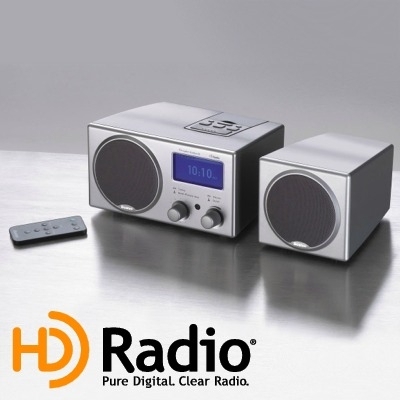
OK, we know what HD TV is, but what is HD Radio?

Broadcasters have been slow to embrace HD Radio for several reasons.

But first, let's step back and look at what happened to your local television stations.  For several years there was a "push" for TV stations to start broadcasting a digital signal - which would then enable them to broadcast programming in high definition.  The FCC got involved and assigned new channels for existing stations and for a period of time TV stations were broadcasting an analog (the original type of TV signal) and a new, digital signal.  New TVs or tuners were required to receive the new digital signals, and in most cases, the digital signal was transmitted at lower power than the old analog signal.  Theory is digital should work equally well with less power - not sure of the new math used with that idea.  But one thing about digital signals - it's either on and looks great, or it's off and looks like "Signal Lost".  No more ghosting, static or noisy video - it's now either there, or not, with nothing in between.  The FCC set a time frame for TV stations to make the switch to digital and turn off the old analog signals, with the idea that some of the now freed up RF spectrum where the old signals existed could be used for things like public safety (police, fire, etc).  Making the switch to digital has been expensive for TV stations - but they really had no choice but to make the FCC mandated switch.

Along with the change to digital - the aspect ratio of the TV picture also changed from the longtime 4:3 ratio (that's 4 units wide and 3 units high) - making for a slightly rectangular picture - to 16:9 closer to the widescreen images we get at the movie theater.  (16 units wide and 9 units high).  Modern film and filming techniques are widescreen, so the newer widescreen TVs give us more of the picture at home.

Although the digital TV signal makes it possible to broadcast a high definition signal, digital doesn't have to be high definition.  So TV stations now have a main channel, which is mostly high definition, although at lower quality than it's capable of to make room for a couple of digital sub channels.  The sub channels are often not high definition, but where TV stations used to just have one channel per station, they now have up to 3 channels per station.  The sub channels are often used to broadcast 24/7 weather, or one of the lesser networks in a market, like CW or MyTV.

While there is no universal standard for HDTV in the US, most stations and networks choose either 720p or 1080i with a 16:9 wide screen aspect ratio.  The highest quality high definition available is 1080p - not broadcast very often because of the bandwidth required - but lots of TVs support 1080p as do upscaling DVD players and Blu-Ray players.

Keep in mind, the FCC forced TV stations to switch to digital - or we'd still likely be watching that old noisy analog video we grew up with.

But, I digress.  How does this relate to HD Radio?

HD Radio, or digital radio has been available to radio stations for several years now - but your local station may or may not be broadcasting digitally.  And therein lies the rub - there are several reasons why any given station may not be broadcasting a digital signal.

First and foremost - the FCC is not mandating radio stations to broadcast a digital signal (yet).  Because of that, the people making radios - namely car manufacturers have been slow to embrace HD Radio because of the lack of stations broadcasting HD Radio.

Second - stations can't just buy a digital transmitter,  plug it in and start broadcasting digitally.  The FCC has authorized a system called In Band On Channel, where the new digital signal is broadcast in the same RF energy bandwidth.  A company named iBiquity stepped in to offer a digital standard for the new IBOC (In Band On Channel) digital broadcasting.  So far, iBiquity is getting licensing money from several sources - transmitter manufacturers - to allow them to incorporate the iBiquity based IBOC radio system in their transmitters.  A radio station would then need to buy a digital transmitter, a high or low level combiner to get the signal to the broadcast antenna with the old analog signal and possibly other equipment PLUS pay a licensing fee to iBiquity on an annual basis for the privilege of broadcasting the new digital HD Radio signal. And like Television, the new digital signal allows for a couple of digital sub channels for use by the station.  So then a single FM station could have 3 channels of programming (and 3 sources of revenue).  iBiquity is also getting a percentage of the revenue gained by using the sub channels  And let us not forget the people making HD Radios are also paying a license fee to iBiquity.


Larger stations (larger markets) saw some value in having 3 stations (channels) where one existed before and have been implementing HD Radio for a few years now.  Associated with that, the car makers are finally starting to put HD Radios in new cars.

So why isn't station A broadcasting HD Radio, while station B is broadcasting HD Radio.  Keep in mind, the FCC is not mandating radio stations to broadcast digitally (as they did with television), and unlike television, there are licensing fees every step of the way to digital radio for iBiquity.  And those licensing fees are in addition to the new expensive digital transmitter, the expensive digital combiner and anything else required to get the digital signal out there with the analog signal.  Like television, digital station power levels are significantly lower than analog power levels and that's been a major fly in the ointment for AM Radio - so far digital on the AM band has lots of problems compared to the analog signal. Overall (AM and FM), it's hard for many broadcasters to justify the expense of adding digital when very few HD Radios exist, and unlike TV, broadcasters may be reluctant to add the sub channels because iBiquity is there wanting a share of the revenue.

At a minimum, a radio station is looking at spending several hundreds of thousands of dollars to add HD Radio - with no immediate return on that investment.

A successful Classic Rock station could add HD Radio and put out a subchannel with Southern Rock or a subchannel with 80s Rock.  A successful Country station could add HD Radio and put out a subchannel with Classic Country or a subchannel with Red Dirt Country.

In addition to the cost of the equipment and licensing fees to add HD Radio, there's also the added cost of operating the new subchannels.  It would be like operating 3 radio stations where 1 existed analog, and with group owners, would be like operating 9 radio stations where 3 existed analog.

So, for the most part, money, or more specifically lack of money has stalled the rollout of HD Radio.  HD Radio exists in larger cities where stations have deeper pockets (of money), but is still slow to come to medium sized radio markets, let alone small market radio.


The FCC really screwed up on digital radio by allowing iBiquity to charge license fees here, there and everywhere.  Transmitter manufacturers pay iBiquity, radio stations pay iBiquity and radio manufacturers pay iBiquity.  And its "licensing" - it goes on and on and on.

May God help radio if the FCC ever mandates that radio stations switch to digital broadcasting.  And may the government provide funding for stations to make the switch.  Without some kind of funding, HD Radio will continue to move along slowly as long as station owners and group station owners are satisfied with the status quo world of analog.

Wednesday, January 5, 2011

TV is primary source for weather information


A new poll by Rasmussen shows that most people rely on local television for weather related information.; But what's really surprising about the poll results is the extremely low percentage of people that rely on radio for weather information.

Another surprise, is that in reporting results of the poll, Radio Business Report apparently didn't notice the disparaging news for radio, but instead pointed out the small percentage of people who rely on newspapers for weather information.

The poll asked respondents to identify their primary source of weather information. Television was listed by 54% of those responding, while radio was listed by only 5% (that's right, just 5%), and newspapers were at the bottom of the results, listed by only 2% of those responding.

My take:  while TV should be no surprise in the poll results - local TV does a very good job of covering weather in the 21st century.  As a mostly live medium, radio is close to last with newspapers, and that's sad news on the state of radio today  The newspaper results are not unusual - considering newspapers have always chronicled history - but radio has long been a medium for live, breaking news and weather.

Here's how the poll shaped up, asking people to identify their primary source of weather information: 

  54%: local television
  20%: internet
  19%: cable television
   5%: radio
   2%: newspaper

Wednesday, December 29, 2010

The Studio - Part 2 aka The Transmitter

In 1967 I constructed a make-believe studio in my bedroom.  Over the next year, or so, I actually took that to the next level with some help from Radio Shack.

I discovered Science Fair P-Box kits and started buying them on a fairly regular basis.  Building them was fun and they usually worked as advertised.  I can remember building the AM radio kit, the FM radio kit, the metronome kit and the goofy neon light kit among others.  Here's a link to some info about those old kits: Click here.

I also built the AM wireless microphone and the FM wireless microphone.  As I recall I never got the AM version to work, but the FM version worked perfectly.  Here's the manual for the FM Wireless Microphone:
28-109


If you read between the lines, you can see that this is actually a small FM transmitter.  And here's where I took my bedroom studio to the next level.  By 1968 I had a stereo record player that had an output on it, a tape recorder and a microphone.  I actually fed audio from the record player, as well as the mic amplified by the tape recorder into that little FM transmitter and started "broadcasting" from time to time.


I could receive the signal up to 5 city blocks away from my house - pretty amazing for that kit.  My record library was very limited, but an album side would play for more than 15 minutes on its own.  During that time period, there were companies that sent audio presentations on a flimsy tear-out record in the mail - so I even had commercials.  One I remember is Cherokee Village Resort in Arkansas.  These tear-out records also appeared in magazines and books.

Tuesday, December 28, 2010

A little radio history was made in Mexico, Missouri

I was at Forest Park Community College in St. Louis in 1975, while a bit of radio history took place in Mexico, Missouri.  The first solid state AM transmitter manufactured by the Harris Corporation was put in service at KXEO.  Hilmer Swanson headed up the design and manufacture of the Harris MW-1 in Quincy.  From a Harris Corporation newsletter:
Harris Corp March 1975 Newsletter MW-1

That MW-1 was still in use when I started at KXEO in 1978.  In 1980 the station purchased a larger FM transmitter from McMartin, and at the same time purchased a new BA-1K AM transmitter.  I was told the Harris MW-1 was "traded in" to McMartin,  as McMartin was very interested in the solid state technology.  While the BA-1K had a solid state exciter (the first modulated power stage of a transmitter), the BA-1K relied on 4 tubes to achieve its 1000 watts.

You may be wondering why the station would have gone from the newer all solid state technology of the Harris MW-1 back to tubes with the McMartin BA-1K. The KXEO tower at that time had massive amounts of static electricity jumping around the tower and guy wires with each passing thunderstorm, and that was enough of a jolt to the MW-1 to take out the final power stage on a fairly regular basis.

Tuesday, November 2, 2010

A Record player, Santa Claus and the Easter Bunny

Here's an aside - something that means something to me but doesn't necessarily fit nice and neatly into the context of the overall story, although some people may enjoy this as being completely relevant while others may not.

In 1967 I  toured the radio station at Osage Beach.   That same year I set up my pretend studio in my bedroom so I could emulate some of the great personalities I had been listening to in St. Louis.  A key component of my studio was the record player.  I could play a hit, banter on about something funny, topical or informative while I changed records and then play another hit with no "dead air". I saved up some money and bought quite a few 45's on a regular basis that were popular hits of the time on KXOK.

But I digress, here's the aside:  the record player was a Christmas gift in 1961 when I was 5.  On Christmas morning I unwrapped the record player, squealed with joy and then asked my parents where the record player had come from.  It was a trick question.  3 days earlier I had seen the record player, not wrapped, on the top shelf in a bedroom closet and didn't realize what it was.  Now it's not like I went looking for where my parents hid Christmas gifts - we had a closet with sliding doors and I liked to pretend it was an elevator (like elevators I had seen on TV) and just happened to see the record player way up on the top shelf.

So when I asked my parents where the record player came from, their response was, "Santa Claus". But I knew better than that and told them "Santa didn't bring this record player!".  "Sure he did" they responded.  And then I said "i know Santa didn't bring it because I saw it in the closet a few days ago."  And that's how I found out about Santa Claus.  But the record player was still very special.  Much like the radio would become in just a few years for me, the record player took me to happy, exotic and far away places with songs and stories that I could only imagine.  The record player later piqued my interest in radio - and I suppose it was the first stepping stone on the way to my dream vocation.

And in my bedroom studio, that record player helped build the foundation for seeking a career in radio later on.  So finding out about Santa Claus was not a disappointment to me, even at the age of 5, although it was 6 years later until I actually set my goal to pursue a career in radio.

Oh, and how does the Easter Bunny tie in with this?  Well, with the unveiling of Santa Claus I realized other things like the Easter Bunny were smoke and mirrors for children too.  Not bad for a 5 year old.